Case study
Portfolio Website
This site — rebuilt from a broken template into a typed, data-driven Next.js application.
Problem
The original site was a template: hardcoded JSX content, state-based fake navigation with no URLs, image paths broken in production, fonts that downloaded but never rendered, and placeholder content that did not represent its owner.
Approach
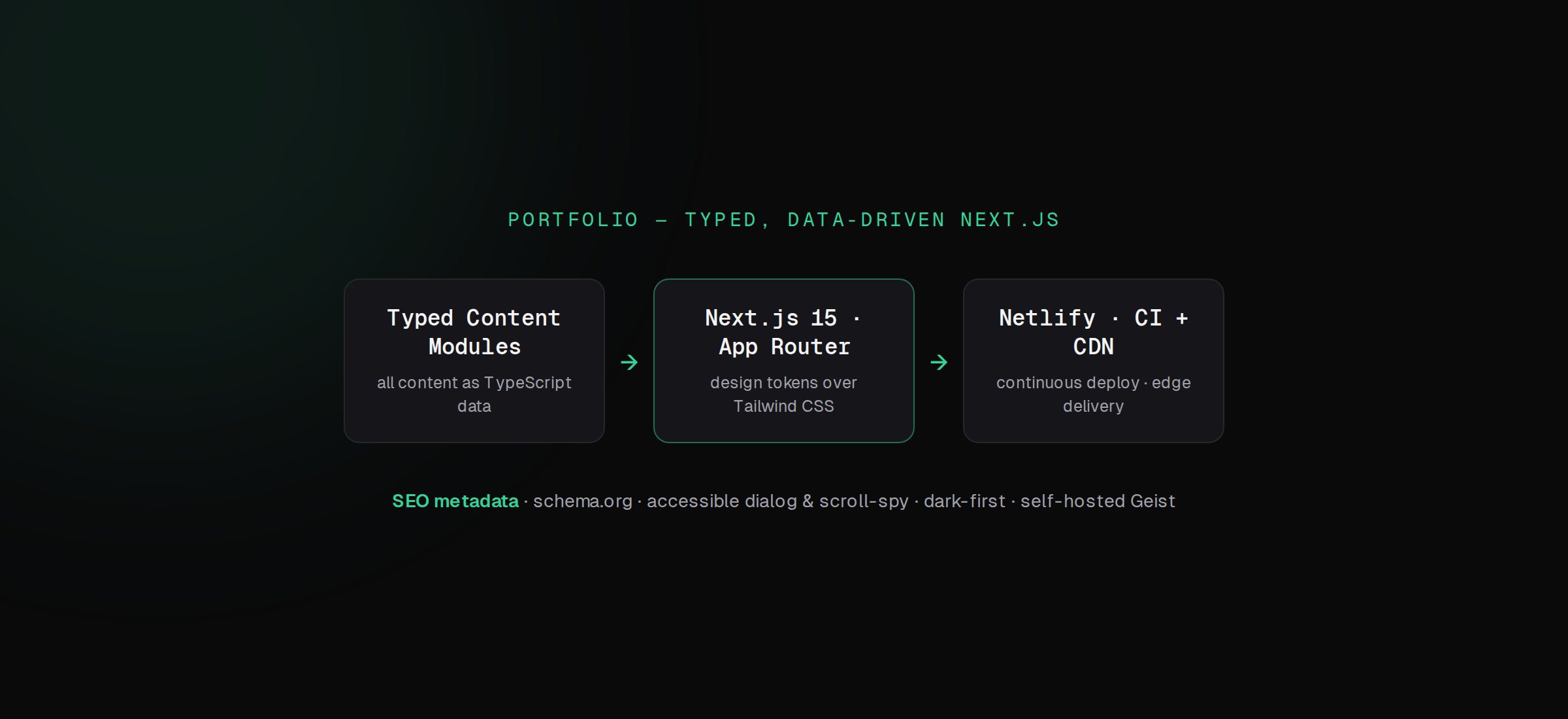
- Migrated to strict TypeScript on the Next.js 15 App Router, with all content extracted into typed data modules — editing the portfolio means editing data, not components.
- Built a semantic design-token system over Tailwind CSS with a committed dark theme and self-hosted Geist typography.
- Rebuilt as a single scrolling page with scroll-spy navigation, an accessible native-dialog project viewer, visible focus rings, and prefers-reduced-motion support.
- Added structured data (schema.org Person), Open Graph assets, a sitemap, robots rules, and Netlify CI deploys captured in netlify.toml.
Outcome
- First-load JavaScript cut from 193 KB to 113 KB; image payload from 10.5 MB to about 0.5 MB.
- Zero console errors or warnings, valid HTML, and clean keyboard navigation.
Stack
Next.js 15React 19TypeScriptTailwind CSSNetlify